
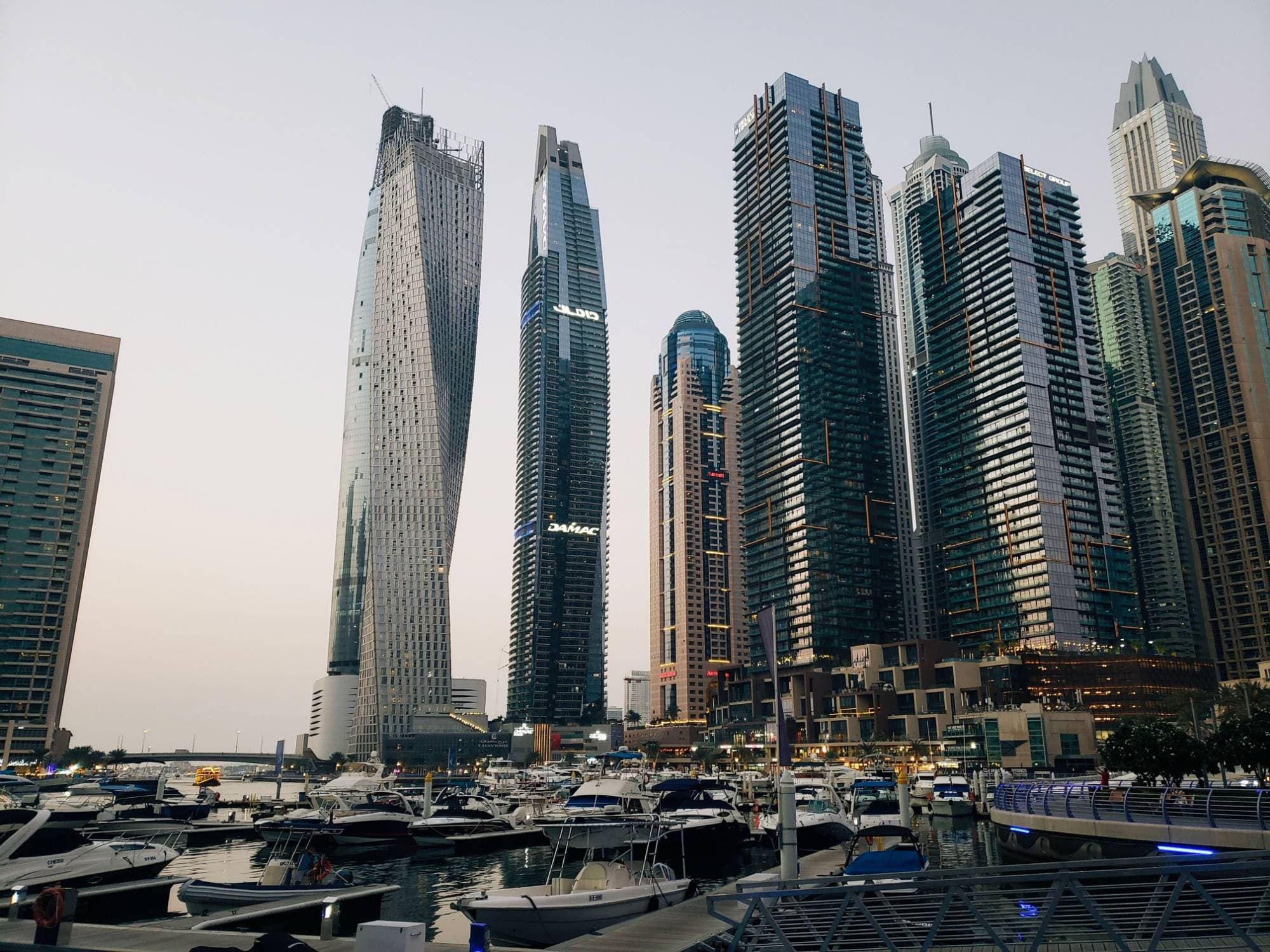
Dubai Marina
Dubai's most liquid address.
The relocating end-user and the yield investor at the same time. If you want a walkable waterfront life and a unit that rents fast in both the long-let and short-stay markets, the Marina is usually the default answer.
Buyers chasing new off-plan stock, since the Marina is built out, and anyone who wants quiet. Weekend traffic, ground-level congestion, and peak-season tourist density come with the territory.
What Dubai Marina trades at.
One of the city's two biggest short-stay hubs and the benchmark for tourist demand, though a minority of towers ban holiday lets at the owners'-association level, so read the building's bylaws before underwriting short-stay income.
Walkable waterfront living with JBR beach, two metro stations, tram, and water taxi; docked a point for weekend traffic, street noise, and peak-season tourist density.
Source: DLD transaction data via DXB Interact, twelve months to August 2026 · Summers ratings are our own judgment.
Dubai Marina is the address most international buyers can picture before they land. After Downtown and the Palm it is the most recognized name in the city, and it backs that up with the deepest liquidity of any established premium community: 1,362 sales cleared between January and early August 2026 (DLD data via DXB Interact), split between end-users and investors in near-equal measure. The DLD median for the period sits just under AED 2M, and demand runs on two engines at once: long-let residents who want the waterfront and short-stay guests who want JBR beach next door.
The community has been built out since the mid-2000s, with only isolated infill plots left, so the buying decision is really a building decision. Per-square-foot pricing spans AED 1,300 to 2,800 depending on tower age and brand, which makes the community average close to meaningless. Two units 200 meters apart can sit at opposite ends of that spread. The specific tower, its age, its service history, and its short-let bylaws matter more than the Marina label.
Day to day it is one of the few genuinely walkable districts in Dubai: the Marina Walk promenade, JBR beach on the doorstep, two metro stations plus the tram and a water taxi. The trade-off is density. Evenings and weekends are loud and slow-moving at street level, and Downtown is a 20 to 25 minute drive.
Averages are close to meaningless here.
The psf spread across towers runs AED 1,300 to 2,800 depending on age and brand, so price the building, not the community. And know the direction of travel before you negotiate: DLD data via DXB Interact has the Marina median down 7 percent and psf down 5 percent year on year for Jan to Aug 2026, so there is no need to chase asking prices.
It is one of the two strongest short-stay markets in Dubai, with JBR beach demand feeding it year round. You need a DET holiday-home permit per unit, and while most towers allow it, some buildings have voted them out. Verify the specific building's bylaws before you buy for short-stay income. Studios and one-beds carry the best yield economics; large units run materially lower.
Marina wins on yield, around 5.9 percent blended (Bayut) against Downtown's low fives, and on waterfront lifestyle. Downtown wins on prestige, capital preservation, and the cleanest exit story in the city. The choice usually follows the buyer's intended use more than the numbers.
Effectively no. Construction wrapped in the mid-2000s and what remains is isolated infill, so new-build appetite gets routed next door to Dubai Harbour. Most Marina purchases are resale, which has an upside: you can inspect the actual unit, the actual view, and the building's service record before you commit.
Twenty years of construction vintage in one postcode. Newer and branded towers sit at the top of the AED 1,300 to 2,800 psf spread, older stock at the bottom, and service quality widens the gap over time. This is why we price the specific building rather than quoting the community average.